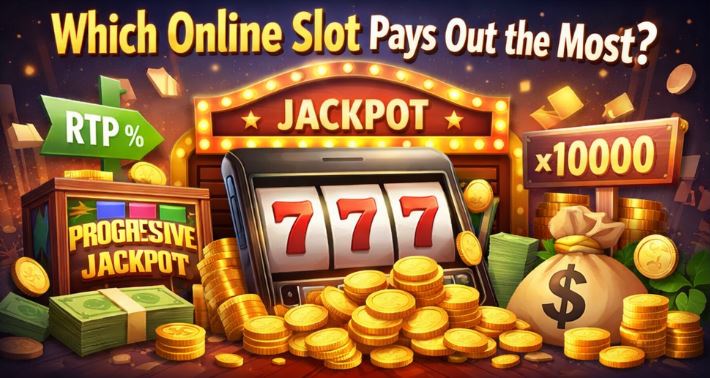
The question “Which online slot pays out the most?” is one of the most searched queries among slot players worldwide. Whether someone is new to online casinos or already experienced, the goal is usually the same: finding games with the highest possible returns.
The short answer is this: there is no single online slot that consistently pays out the most to every player. However, some slots statistically offer higher Return to Player (RTP) percentages or larger maximum win potential than others. Games with RTP above 96.5%, high maximum win multipliers, and progressive jackpots often attract players who are looking for bigger payouts.
The detailed answer is more nuanced. A slot’s payout potential depends on several factors, including RTP, volatility, jackpot structure, bonus features, and even the casino platform’s configuration. Understanding these elements is essential if you want to make informed decisions rather than relying on myths or marketing claims.
- Understanding What “Pays Out the Most” Really Means
- The Role of RTP in Determining High-Paying Slots
- High RTP Slots Known for Strong Returns
- Maximum Win Potential vs. RTP
- Progressive Jackpot Slots
- Volatility and Its Impact on Payouts
- Bonus Features and Free Spins
- Casino RTP Settings and Regulation
- Myths About “Hot” and “Cold” Slots
- Expert Perspective on Choosing High-Paying Slots
- Short Direct Answer
- Comprehensive Conclusion
Understanding What “Pays Out the Most” Really Means
Before naming specific examples, it is important to clarify what “pays out the most” actually means. Players often use this phrase to describe one of three things:
- The highest RTP percentage.
- The largest maximum win multiplier.
- The biggest jackpot ever recorded.
These are not the same thing.
A slot with a 98% RTP may provide better long-term theoretical returns, but it may not offer a life-changing jackpot. On the other hand, a progressive jackpot slot might have a lower RTP yet still produce the largest single win in history.
As someone who has analyzed hundreds of slot paytables, game sheets, and volatility reports across multiple regulated markets, I can confirm that understanding these distinctions is crucial for realistic expectations.
The Role of RTP in Determining High-Paying Slots
RTP, or Return to Player, is the theoretical percentage of wagered money a slot returns to players over millions of spins. For example, a slot with 97% RTP theoretically returns $97 for every $100 wagered in the long run.
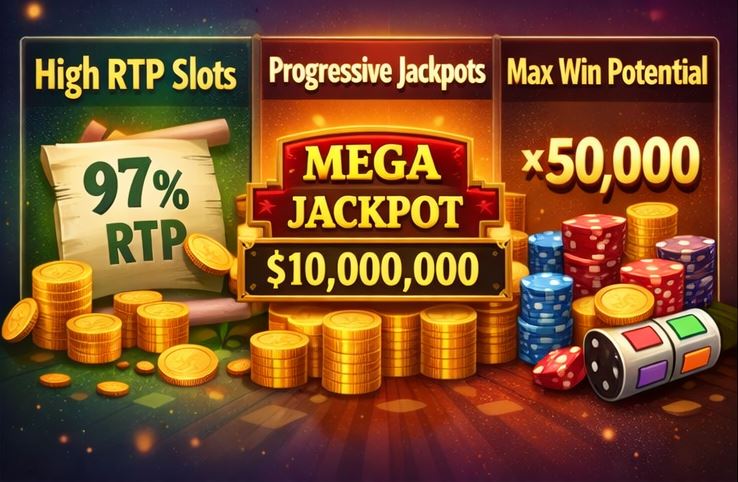
Some of the highest RTP slots in the industry reach 97.5% to 98% under optimal settings. However, it is important to note that RTP can vary depending on the casino’s configuration, as some providers offer adjustable RTP ranges.
High RTP slots are often considered “better paying” because they reduce the house edge. That said, RTP works over a very large sample size. In short sessions, results can vary dramatically.
High RTP Slots Known for Strong Returns
While there is no universal winner, several online slots are often cited for high RTP percentages or strong payout structures:
- Blood Suckers (NetEnt) – Known for RTP around 98%.
- Mega Joker (NetEnt) – RTP can exceed 99% in certain gamble modes.
- 1429 Uncharted Seas (Thunderkick) – RTP around 98.6%.
- Book of 99 (Relax Gaming) – RTP up to 99%.
These games attract advantage-oriented players who prioritize mathematical return over flashy jackpots.
However, high RTP does not guarantee frequent wins. Many of these games have medium to high volatility, meaning you may experience longer dry spells between payouts.
Maximum Win Potential vs. RTP
Some players define “pays out the most” by maximum win potential rather than RTP. Modern video slots frequently advertise maximum wins of 5,000x, 10,000x, or even 50,000x your stake.
High-volatility slots often carry the biggest maximum multipliers. Examples include games from providers known for volatile mechanics and bonus buy features.
A slot offering a 50,000x maximum win may statistically hit that top prize extremely rarely. Therefore, the maximum win figure reflects potential, not probability.
Progressive Jackpot Slots
If the question refers to the largest single payout ever, progressive jackpot slots clearly dominate.
Games such as Mega Moolah and Mega Fortune have produced multimillion-dollar wins. Progressive jackpots accumulate as players wager across networks, meaning the prize pool grows continuously until someone wins it.
While these games can pay out the most in absolute monetary terms, their base RTP is often lower than non-progressive slots because a portion of each bet funds the jackpot pool.
Volatility and Its Impact on Payouts
Volatility, also called variance, describes how often and how much a slot pays.
- Low volatility: Frequent small wins.
- Medium volatility: Balanced frequency and size.
- High volatility: Rare but potentially large wins.
High volatility slots are often perceived as “paying more” because when they hit, the payouts can be substantial. However, they also involve higher risk.
From a bankroll management perspective, high volatility games require larger balance cushions to sustain longer sessions.
Bonus Features and Free Spins
Many of today’s most lucrative slots include advanced bonus rounds, free spins with multipliers, cascading reels, and expanding wilds. These features significantly increase win potential during certain rounds.
For example, slots with sticky wild mechanics in free spins can create stacked multipliers across consecutive spins. Other games use escalating multipliers that increase with each cascade.
Bonus mechanics often drive the largest wins, rather than base game spins.
Casino RTP Settings and Regulation
Not all casinos operate identical RTP versions of a slot. Some providers allow operators to choose between multiple RTP configurations, such as 96%, 94%, or 92% versions.
Licensed and regulated casinos must disclose RTP information. It is advisable to check the game information panel before playing.
Regulated markets such as the UK, Malta, and certain Canadian provinces require transparency regarding payout percentages.
Myths About “Hot” and “Cold” Slots
A common misconception is that some slots are “due” to pay or are currently “hot.” In reality, online slots operate on Random Number Generators (RNGs), ensuring each spin is independent.
No previous outcome influences the next spin. Therefore, there is no strategy that can guarantee triggering a payout cycle.
Understanding this helps maintain realistic expectations and supports responsible gambling practices.
Expert Perspective on Choosing High-Paying Slots
From years of reviewing slot mathematics and analyzing certified payout reports, several practical guidelines emerge:
- Choose RTP above 96% where possible.
- Understand volatility before committing larger stakes.
- Check maximum win potential in the paytable.
- Play at licensed, transparent casinos.
- Set clear deposit and loss limits.
No slot eliminates risk. The goal should not be to “beat the system,” but to select games aligned with your preferences and risk tolerance.
Short Direct Answer
The online slots that statistically pay out the most are typically high RTP games such as Book of 99 or Blood Suckers, while progressive jackpot slots like Mega Moolah can produce the largest single payouts. However, no slot guarantees the highest payout in every session because results depend on randomness and volatility.
Comprehensive Conclusion
Which online slot pays out the most ultimately depends on how you define payout. If you prioritize long-term mathematical return, focus on high RTP games above 97%. If you are chasing life-changing jackpots, progressive slots offer the biggest top prizes. If you prefer large multiplier potential, high-volatility video slots may appeal more.
Understanding RTP, volatility, jackpot mechanics, and regulatory transparency allows you to make informed decisions rather than relying on advertising claims.
Online slots are designed for entertainment. While some games statistically offer better payout structures than others, all casino games carry risk. Responsible gambling practices, including setting financial limits and recognizing when to stop, remain essential.
Instead of asking which slot pays out the most, a more productive question may be: which slot aligns best with my budget, risk tolerance, and entertainment goals?